

Finding wholesale suppliers for Amazon sounds simple – until you actually try it. Many sellers run into the same problems: suppliers that don’t allow Amazon sales, prices that kill margins after FBA fees, or invoices that won’t protect you from authenticity claims.
A “working” wholesale supplier is not just someone willing to sell you products. It’s a supplier that fits Amazon’s rules, your business model, and your profit goals.
In this зщые, we’ll break down what working wholesale suppliers really mean for Amazon sellers, how to select them step by step, how to find them faster using Seller Assistant’s Sourcing AI and Free AI Supplier Finder, and the most common wholesale sourcing mistakes to avoid.
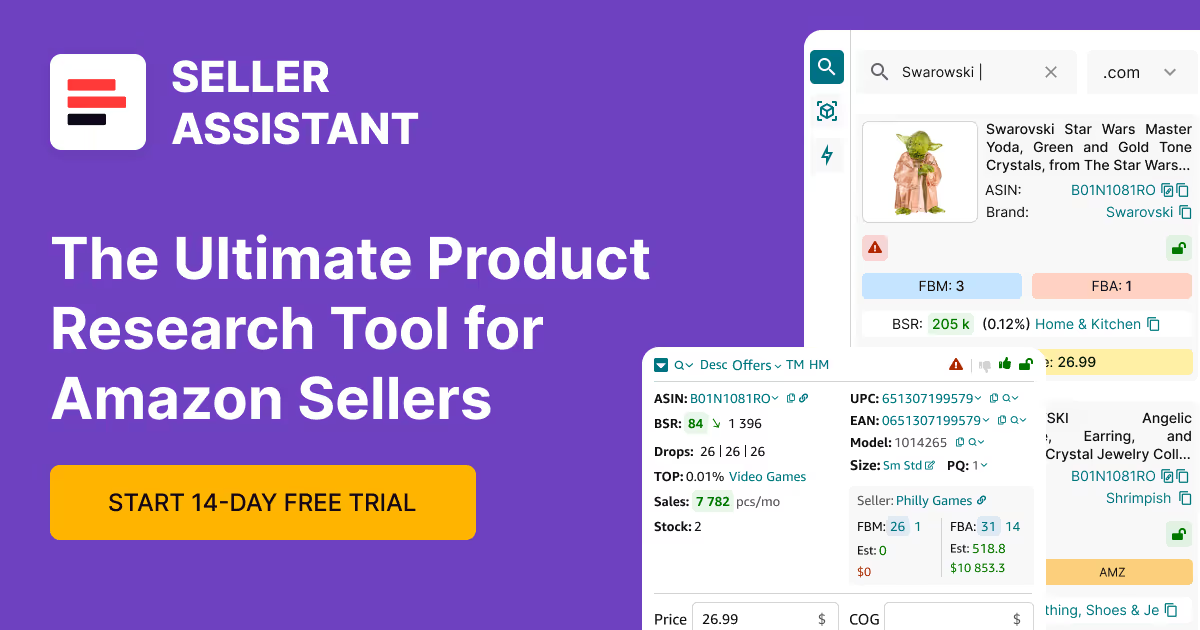
Note. Seller Assistant is an end-to-end Amazon workflow management platform that integrates 10+ wholesale-focused solutions into one connected system. It combines sourcing workflow automation, bulk research and intelligence tools, and integrated Chrome extensions – giving you everything you need to streamline finding deals, managing suppliers, and creating purchase orders.

The platform aggregates: workflow management tools – Purchase Orders Module, Suppliers Database, Warehouses Database to organize, automate, and scale every step of your Amazon wholesale and arbitrage operations ; bulk research & sourcing tools – Price List Analyzer, Bulk Restriction Checker, Sourcing AI, Brand Analyzer, Seller Spy to evaluate supplier price lists, verify selling eligibility and restrictions, open new brands, and discover winning product ideas from competitors to expand your product catalog; Chrome extensions – Seller Assistant Browser Extension, IP-Alert Extension, and built-in VPN by Seller Assistant to deep-research products, check IP claims and compliance, and access geoblocked supplier sites directly within your browser; and integrations & team access features – seamless API connectivity and integrations with Zapier, Airtable, and Make, plus Virtual Assistant Accounts for secure, scalable team collaboration.
With Seller Assistant, every step of your Amazon wholesale and arbitrage workflow is automated and connected.
What “Working” Wholesale Suppliers Mean for Amazon Sellers
For Amazon sellers, a wholesale supplier “working” has nothing to do with how cheap the price looks on paper. A working supplier is one that fits Amazon’s rules, protects your account, and supports long-term selling. That means clean invoices, predictable restocks, realistic margins after FBA fees, and no surprises with IP claims or brand complaints. Many suppliers sell products. Far fewer actually work for Amazon.
Authorized vs unauthorized suppliers
Before reaching out to any supplier, it’s critical to understand whether they are authorized by the brand. This distinction directly affects account safety, invoice acceptance, and long-term scalability on Amazon.
Authorized suppliers
Authorized suppliers are officially allowed by the brand to distribute and resell its products. They can provide invoices that Amazon accepts for ungating, authenticity checks, and appeals. Buying from authorized suppliers reduces the risk of IP complaints and listing removals, which makes them the safest option for wholesale sellers.
Unauthorized suppliers
Unauthorized suppliers sell genuine products but do not have brand approval. This is common with closeouts, secondary distributors, and liquidators. While prices may look attractive, invoices may not protect you during Amazon checks, and brands can still file IP complaints.
Brand owners vs distributors vs importers
Not all wholesale suppliers play the same role in the supply chain. Knowing who controls the product helps Amazon sellers set realistic expectations around pricing, approvals, and restrictions.
Brand owners
Brand owners manufacture or control the product and brand. They decide who can sell on Amazon and under what conditions. Working directly with brand owners often means better protection and stronger long-term relationships, but approvals can be harder to get.
Distributors
Distributors are middlemen authorized to sell products from multiple brands. They are easier to onboard with and offer broader catalogs, but margins are usually thinner due to additional markups.
Importers
Importers bring products from overseas manufacturers and sell them domestically. Some act like brand owners, others like wholesalers. They can offer strong pricing, but Amazon sellers must confirm invoice compliance and brand ownership carefully.
Supplier types comparison
Supplier type | Amazon risk level | Invoice strength | Margin potential | Best for |
Brand owners | Low | Strong | Medium–high | Long-term wholesale |
Authorized distributors | Low–medium | Strong | Medium | Scaling catalogs |
Importers | Medium | Medium | Medium–high | Advanced sellers |
Local brands | Low | Strong | Medium | Low-competition niches |
Liquidators | High | Weak | High on paper | Rarely sustainable |
What suppliers work on Amazon
Even legitimate suppliers don’t automatically work for Amazon. A supplier only works if it meets Amazon’s operational, compliance, and profitability requirements.
Provide Amazon-accepted invoices
Working suppliers issue invoices with full business details, consistent SKUs, and clear purchase history. This is critical for ungating and account health.
Allow Amazon as a sales channel
Some suppliers forbid Amazon sales or restrict marketplaces. A working supplier explicitly allows selling on Amazon, either openly or contractually.
Support sustainable margins
A supplier works only if pricing supports profit after FBA fees, referral fees, returns, and ads. Cheap products that lose money do not scale.
Offer consistent stock and replenishment
Reliable restocks matter more than one-time deals. Working suppliers support repeat orders without forcing constant product changes.
How to Choose an Amazon Wholesale Supplier Step by Step
Selecting the right wholesale supplier for Amazon is not about mass emailing or buying pre-made supplier lists. It’s a structured process that starts with choosing the right brands, continues with eligibility checks and supplier validation, and ends with organized outreach. Following a clear sequence helps you avoid fake suppliers, reduce account risk, and build sourcing relationships that scale.
Step 1. Start with brand selection, not suppliers
Suppliers only matter if the brand itself works on Amazon. Before searching for suppliers, confirm that the brand is resale-friendly and profitable.
Focus on brands that have:
- No direct Amazon ownership or exclusive Amazon sellers
- At least 500 active ASINs on Amazon
- Customer ratings above 4 stars
- Reasonable competition, ideally under 15 active FBA or FBM sellers
- Avoid private-label brands or brands that restrict third-party sellers. Even legitimate suppliers cannot approve Amazon sellers for restricted brands.
Tip
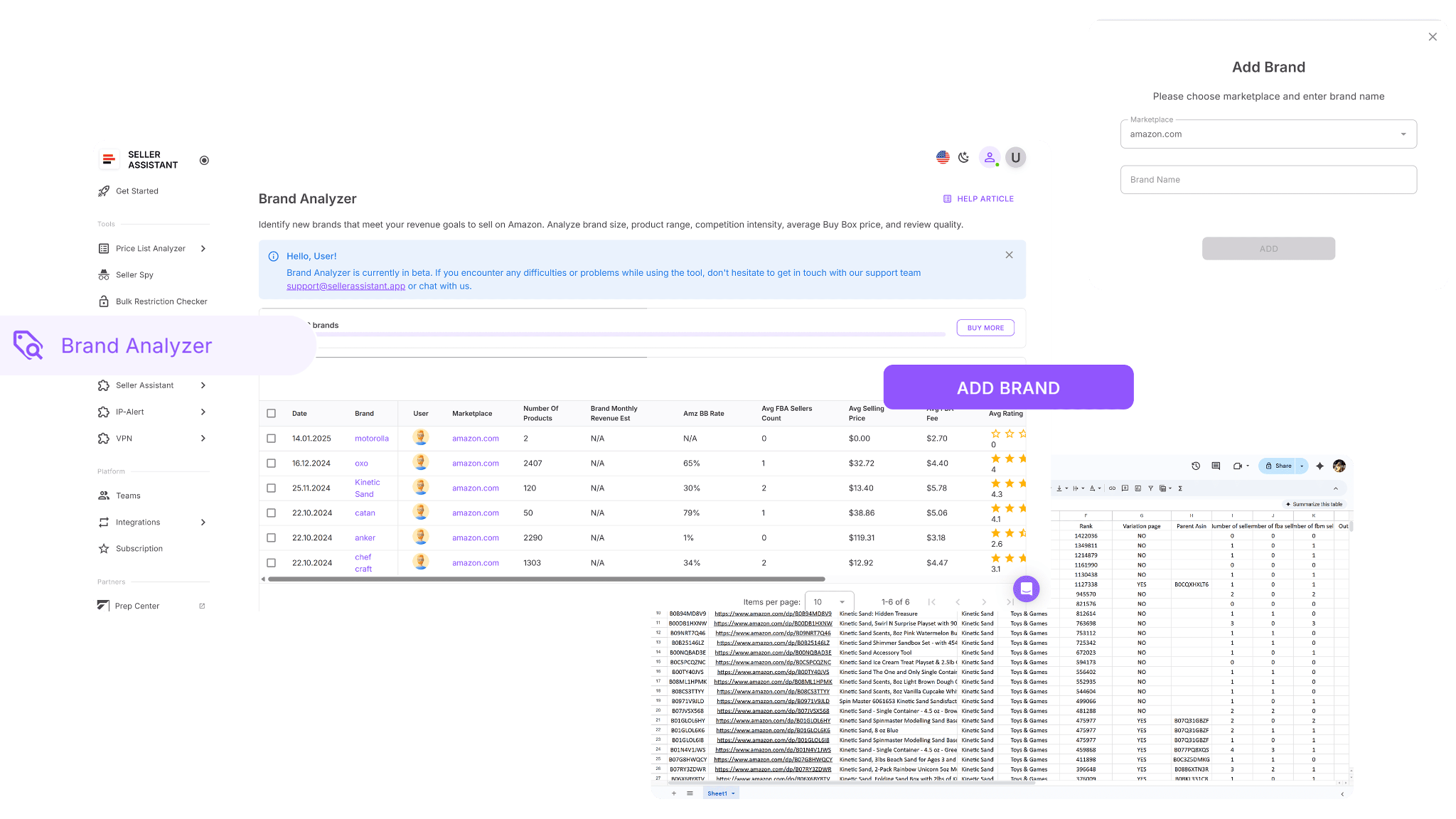
Use Seller Assistant’s Brand Analyzer to quickly evaluate a brand’s catalog, competition, and demand. This helps you decide in minutes whether a brand is worth pursuing.
Step 2. Confirm your Amazon selling eligibility
Before contacting any supplier, confirm that your Amazon account can sell the brand or category. Many products are gated and require approval, invoices, or brand authorization.
Reaching out before checking eligibility often leads to wasted time and rejected applications.
Tip
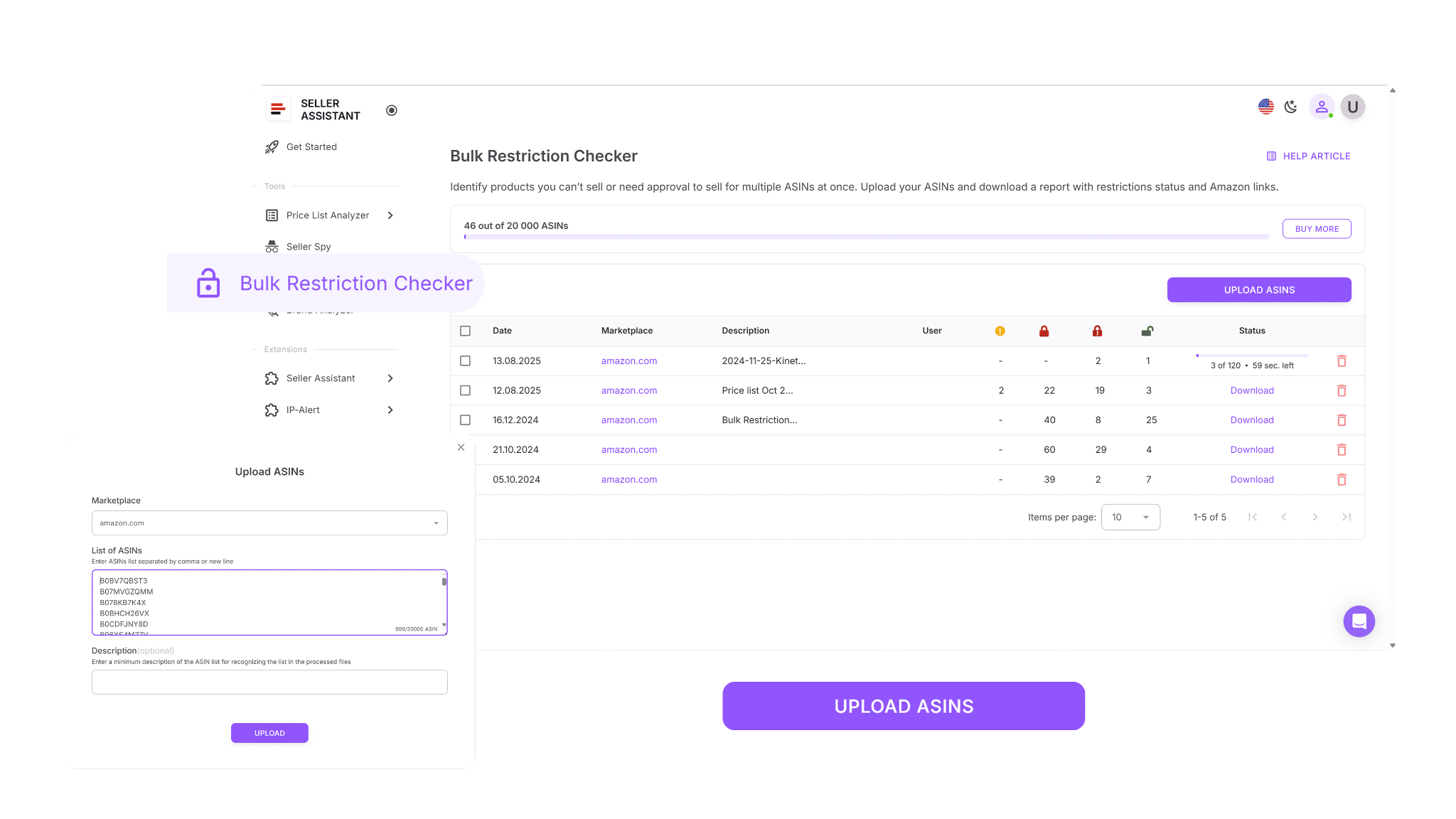
Use Seller Assistant’s Bulk Restriction Checker to verify selling eligibility for thousands of ASINs at once. This keeps your outreach focused only on brands you can actually sell.
Step 3. Find wholesale suppliers for your target brands
Once you shortlist eligible brands, look for suppliers that officially carry those products. Focus on established suppliers with clear wholesale operations and documented business presence.
Common ways to find suppliers include:
- Brand websites and official supplier lists
- Industry directories and trade shows
- Wholesale sourcing tools like Seller Assistant’s Sourcing AI and Free AI Supplier Finder
Prioritize suppliers that already work with Amazon sellers and can provide proper wholesale invoices.
Step 4. Verify supplier legitimacy before ordering
Never place orders or submit documents without confirming the supplier is legitimate. Real suppliers have a clear business footprint and verifiable history.
Check for:
- Business registration and physical address
- Professional website and company email domain
- Active LinkedIn company profile
- Reputation on BBB
- Domain history using Whois
- Scam indicators through tools like ScamAdviser
Avoid suppliers with vague contact details, free email addresses, unrealistic pricing, or unusual payment requests.
Step 5. Track outreach and approvals systematically
Supplier approvals take time, and many outreach attempts won’t receive immediate responses. Without tracking, it’s easy to lose visibility as your sourcing grows.
Use Seller Assistant’s Suppliers Database to record:
- Supplier name, website, and contacts
- Warehouse locations, currency, and assigned team members
- MOV, lead times, and shipping terms
- Outreach status such as contacted, approved, active, or rejected
- Linked warehouses or prep centers for purchase orders
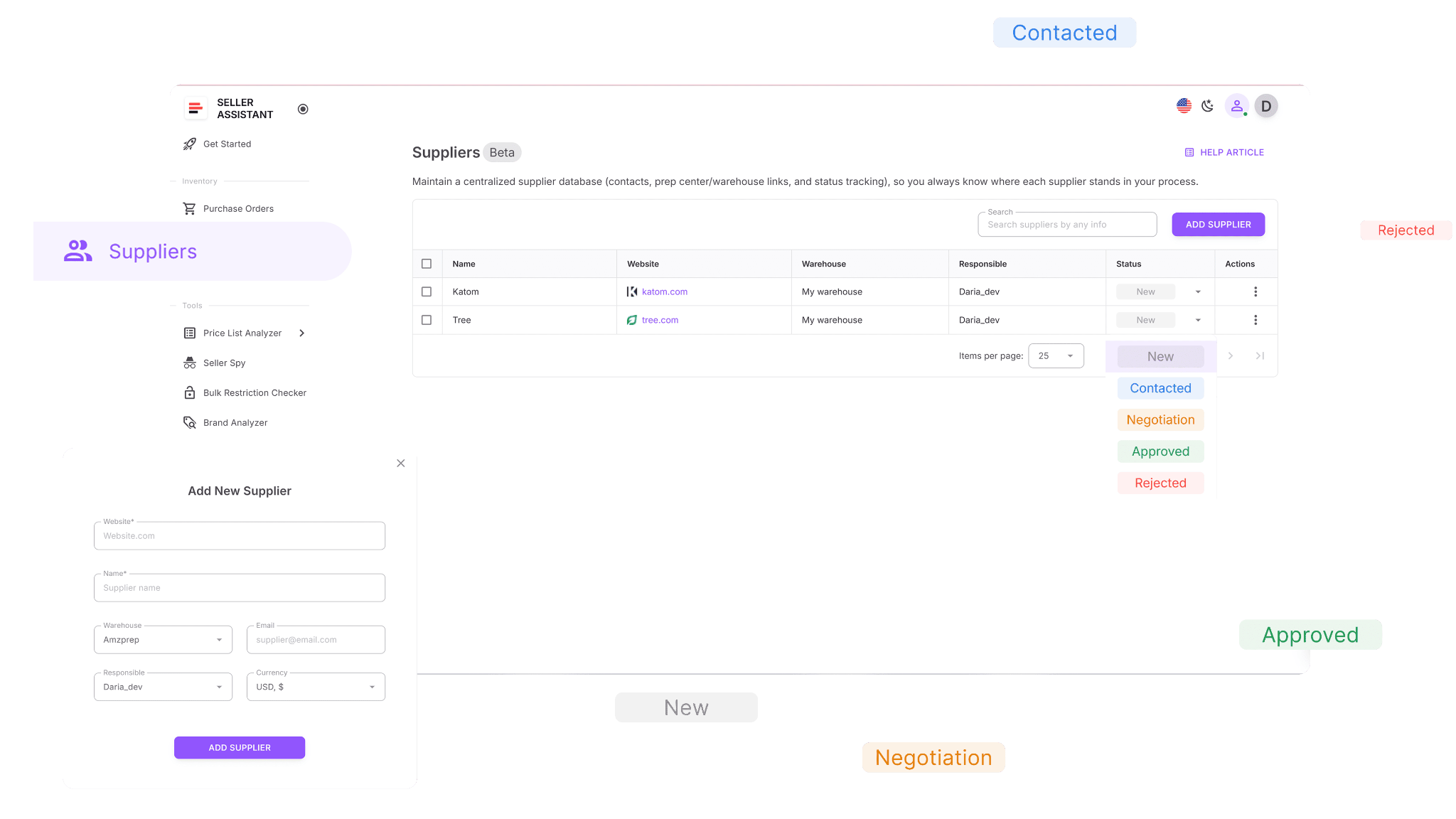
This keeps your supplier sourcing organized, searchable, and scalable as your wholesale business expands.
How to Find Wholesale Suppliers Using Seller Assistant’s Sourcing AI
Searching for Amazon wholesale suppliers by hand usually means dealing with outdated directories, unverified contacts, and hours of dead ends. Many suppliers you find online either don’t allow Amazon sellers or can’t provide invoices that meet Amazon’s requirements.
Seller Assistant’s Sourcing AI eliminates this trial and error by using Amazon-focused data to surface real, U.S.-based wholesale suppliers that actually carry the brands and products you want to resell.
Instead of guessing company names, Sourcing AI works directly from Amazon listings, brands, and ASINs – the same identifiers Amazon uses – making supplier discovery faster, more accurate, and safer for your Amazon account.
What Seller Assistant’s Sourcing AI is
Seller Assistant’s Sourcing AI is a built-in tool created to help Amazon sellers find verified U.S.-based wholesale suppliers for products already selling on Amazon. It is designed specifically for Amazon sourcing and follows reseller logic rather than generic web search results.
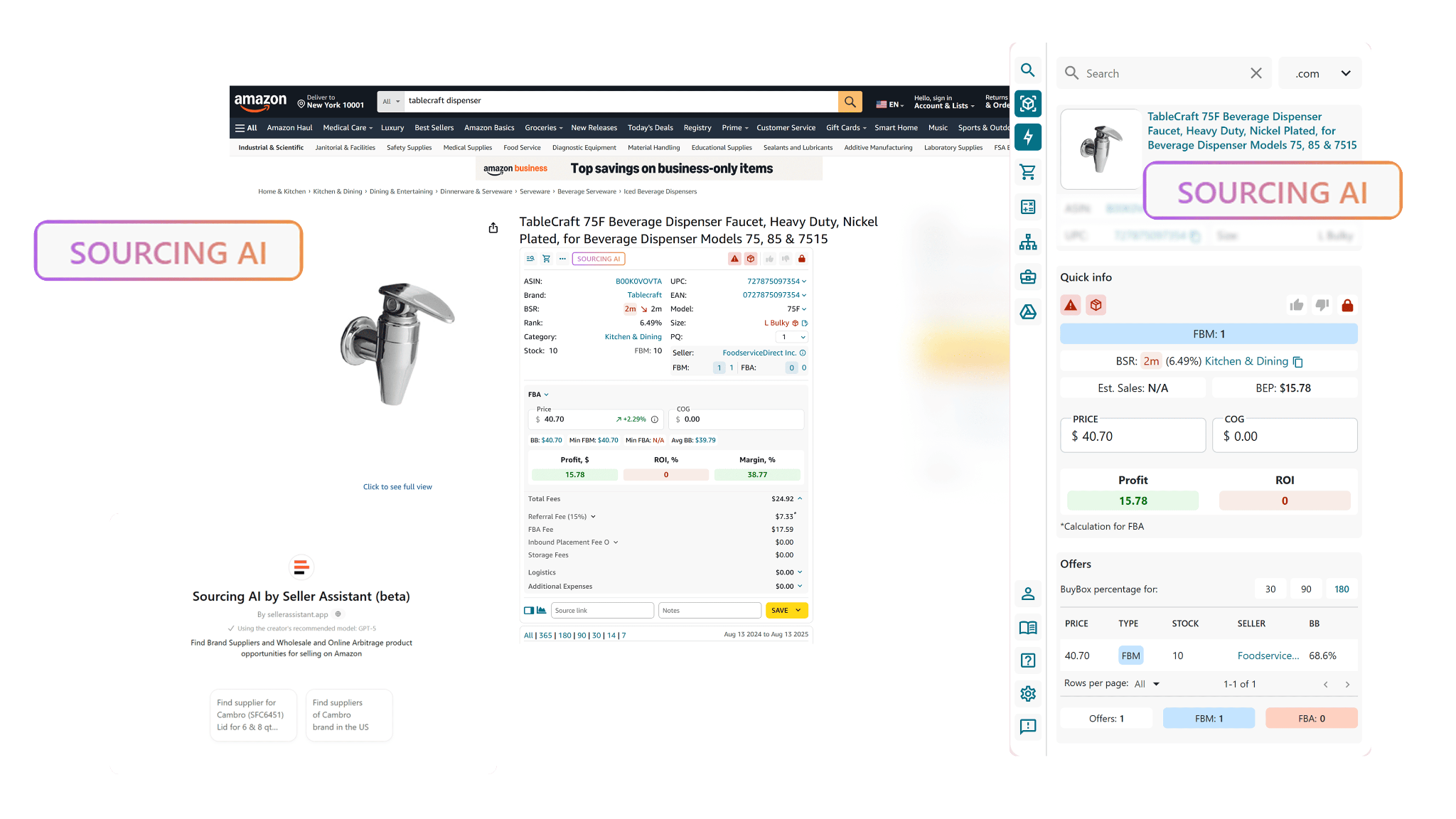
Using Amazon identifiers such as ASINs, UPCs, brand names, model numbers, and Max COG (maximum cost of goods), Sourcing AI scans public supplier websites and returns up to 10 verified supplier options per product.
What Sourcing AI does
Sourcing AI acts as an automated supplier research assistant inside your sourcing workflow. It delivers structured, verified supplier data with clear matching signals and profitability filters.
With Sourcing AI, you can:
- Identify suppliers that carry specific brands you want to resell
- Find suppliers for individual ASINs using AI-based matching
- Match products by ASIN, UPC, EAN, model number, brand, or part number
- See results only from verified U.S.-based suppliers (no Alibaba, Temu, or eBay)
- Apply Max COG to filter out unprofitable offers
- Receive up to 10 supplier offers per product, including supplier name and direct link, SKU and wholesale price, and MOQ
- View match confidence (Exact Match or Likely Match)
- Compare supplier pricing with Amazon prices side by side
- Get alerts for multipacks, bundles, or mismatched listings before sourcing
How Sourcing AI works
Sourcing AI integrates directly into your Amazon research process and does not require separate setup or manual data input.
Step 1. Log into your accounts
Sign in to your Seller Assistant personal account and confirm you are logged into your ChatGPT account (Free or Plus). Both are required to run Sourcing AI searches.
Step 2. Open a product or brand on Amazon
Navigate to any Amazon product page, search results, competitor storefront, or Seller Assistant Side Panel View. Sourcing AI works directly from your active browsing session.
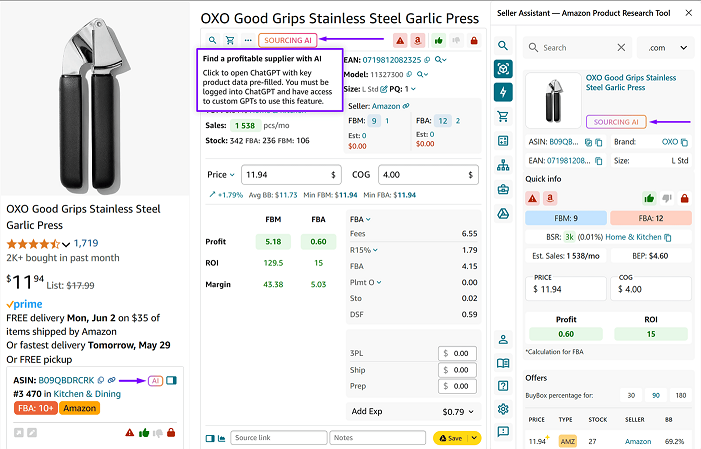
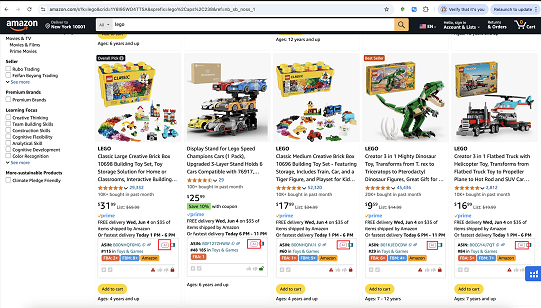
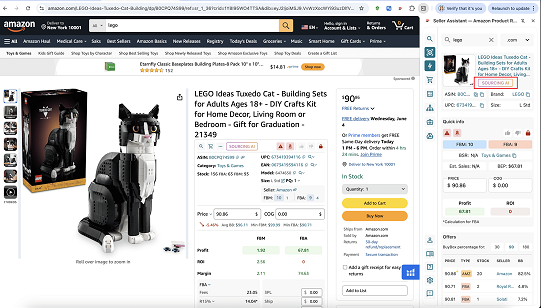
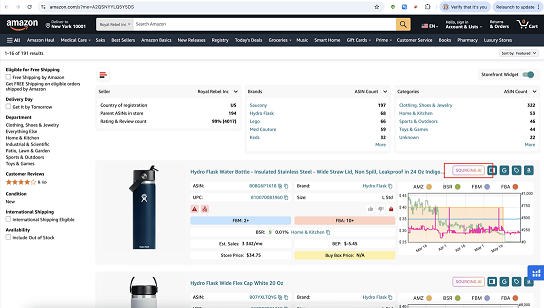
Step 3. Click the “Sourcing AI” button
The button appears across multiple Seller Assistant interfaces, including:
- Amazon product pages in Seller Assistant Extension
- Quick View on Amazon search results
- Side Panel View on supplier websites
- Storefront Widget inside your Amazon competitor storefronts
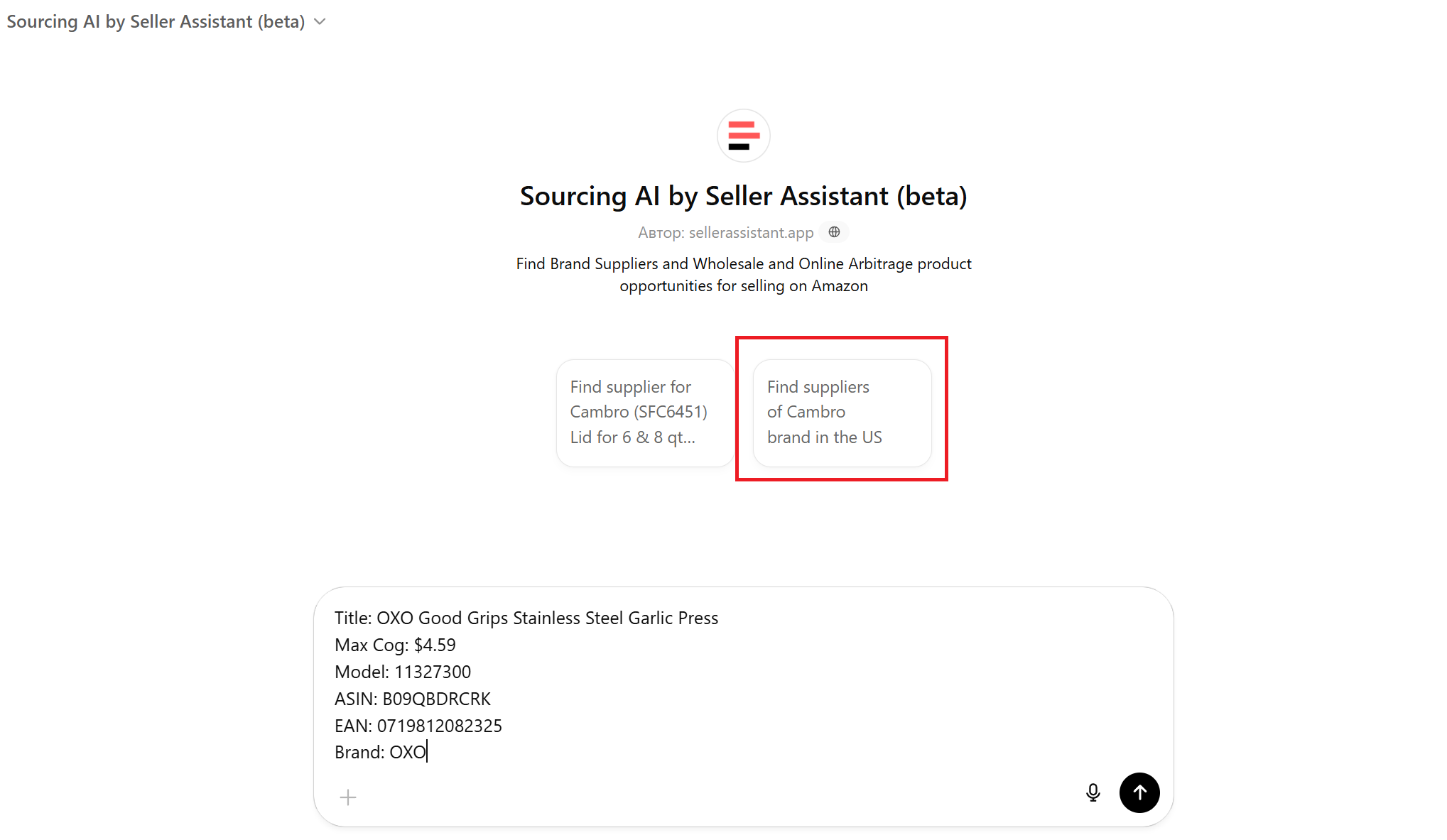
Step 4. Search for brand suppliers
To find wholesale suppliers, select the request type “Find suppliers of [brand name] in the U.S.”. Sourcing AI identifies official or high-volume suppliers that carry that brand.
Step 5. Review supplier results
Within seconds, Sourcing AI returns up to 10 verified U.S.-based supplier options. Each result is labeled as Exact Match or Likely Match and sorted by price and match relevance.
Step 6. Take action
Review supplier names, pricing, SKUs, MOQs, and direct links. Use this information to confirm product fit, calculate margins, and begin supplier outreach with confidence.
How to Find Suppliers with Free AI Supplier Finder
Seller Assistant’s Free AI Supplier Finder helps Amazon sellers quickly map brands to real wholesale suppliers and sourcing partners. Instead of guessing, scrolling through search results, or opening dozens of tabs, you enter a brand name and receive a structured list of verified suppliers, authorized partners, and alternative sourcing options—all in one place. No Amazon account access or ASIN analysis is required.
What Free AI Supplier Finder is
Seller Assistant’s Free AI Supplier Finder is a free, web-based tool available on the Seller Assistant website. It is designed to help Amazon sellers identify wholesale suppliers and sourcing partners for any brand at the brand level. This makes it ideal for early-stage wholesale research, before choosing specific products or ASINs.
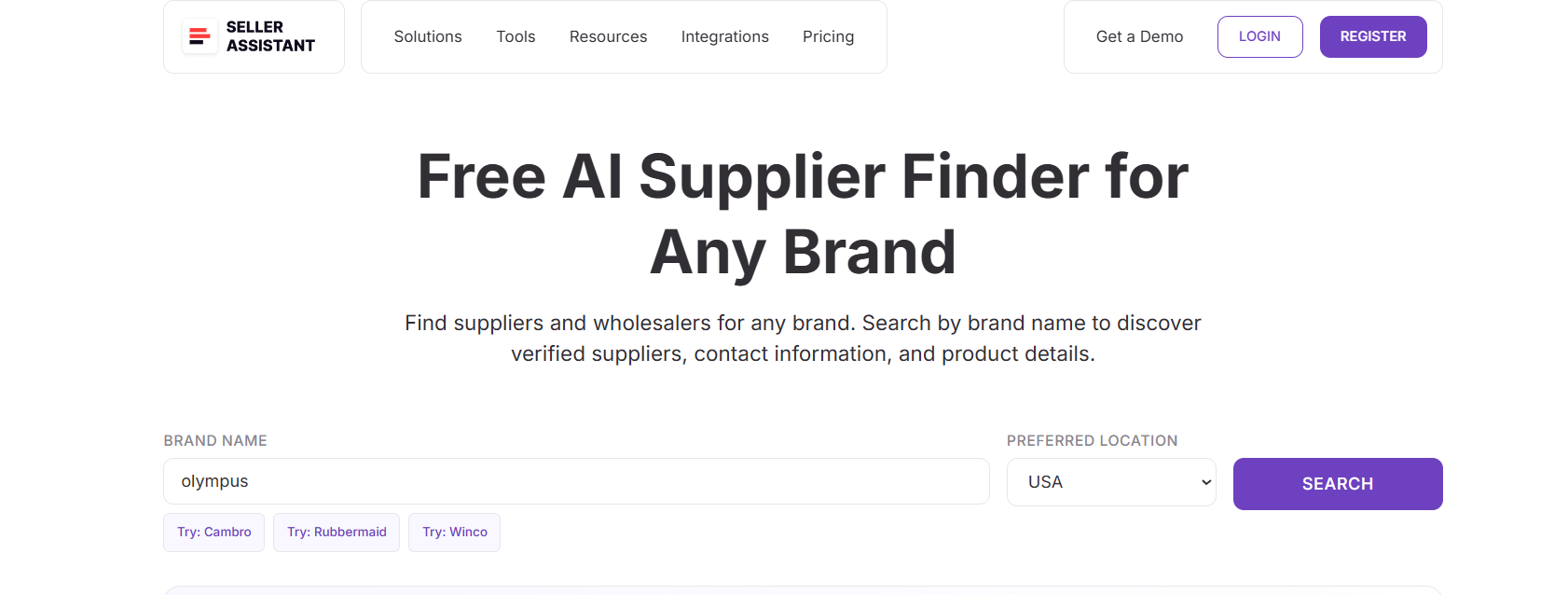
You simply enter a brand name, select your preferred supplier location (for example, USA), and run a search. The tool returns a curated list of brand owners, authorized suppliers, and alternative sourcing options, complete with confidence ratings and contact details.
What Free AI Supplier Finder does
Free AI Supplier Finder functions as a brand-to-supplier discovery engine, giving you a clear picture of how a brand’s supply chain is structured.
With this tool, you can:
- Find authorized suppliers and wholesale partners for any brand
- Identify whether a brand sells directly or only through suppliers
- See supplier confidence levels (high or medium)
- Access supplier websites, contact information, and business addresses
- Understand how a brand’s product lines are divided across different entities
- Discover regional or international suppliers when U.S.-based options are limited
These insights help you decide who to contact first and which suppliers deserve deeper outreach.
How Free AI Supplier Finder works
The tool is built for fast, frictionless research and does not rely on Amazon product data.
Step 1. Enter a brand name
Go to Free AI Supplier Finder on Seller Assistant website and enter the brand you want to research.
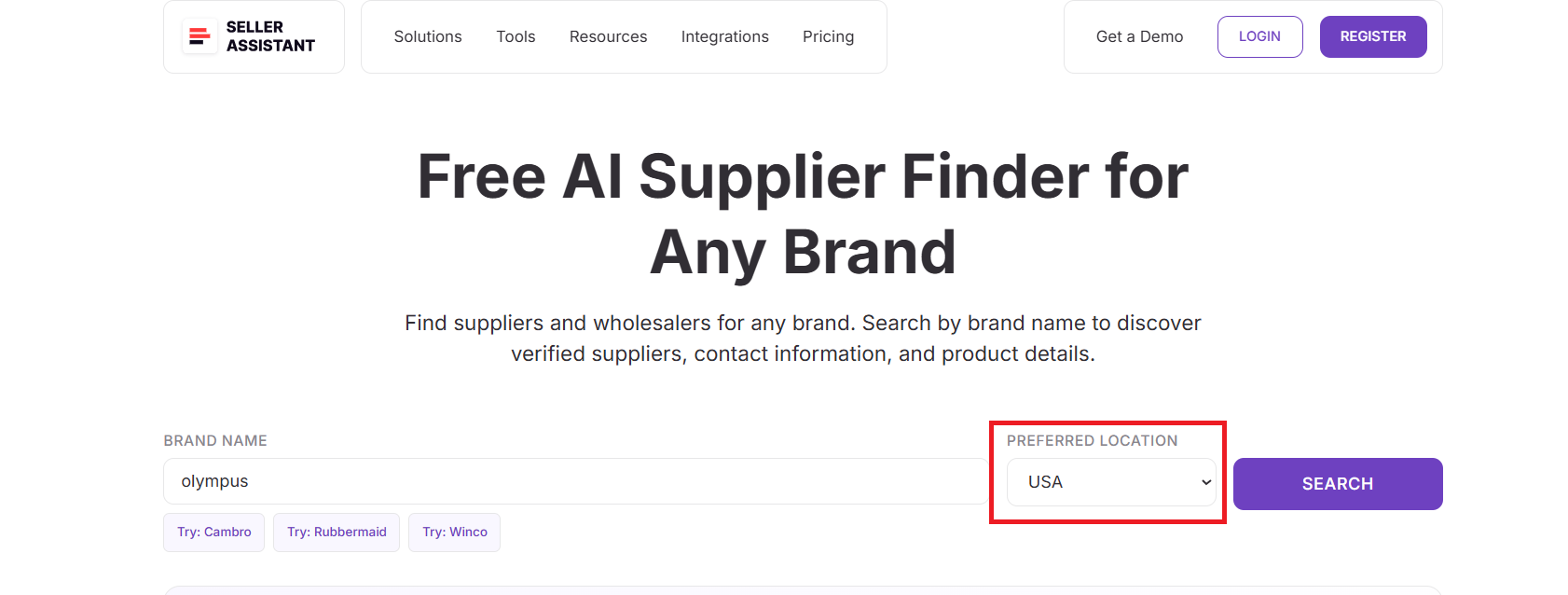
Step 2. Select supplier location
Choose your preferred supplier location, such as the USA, to filter results by geography.
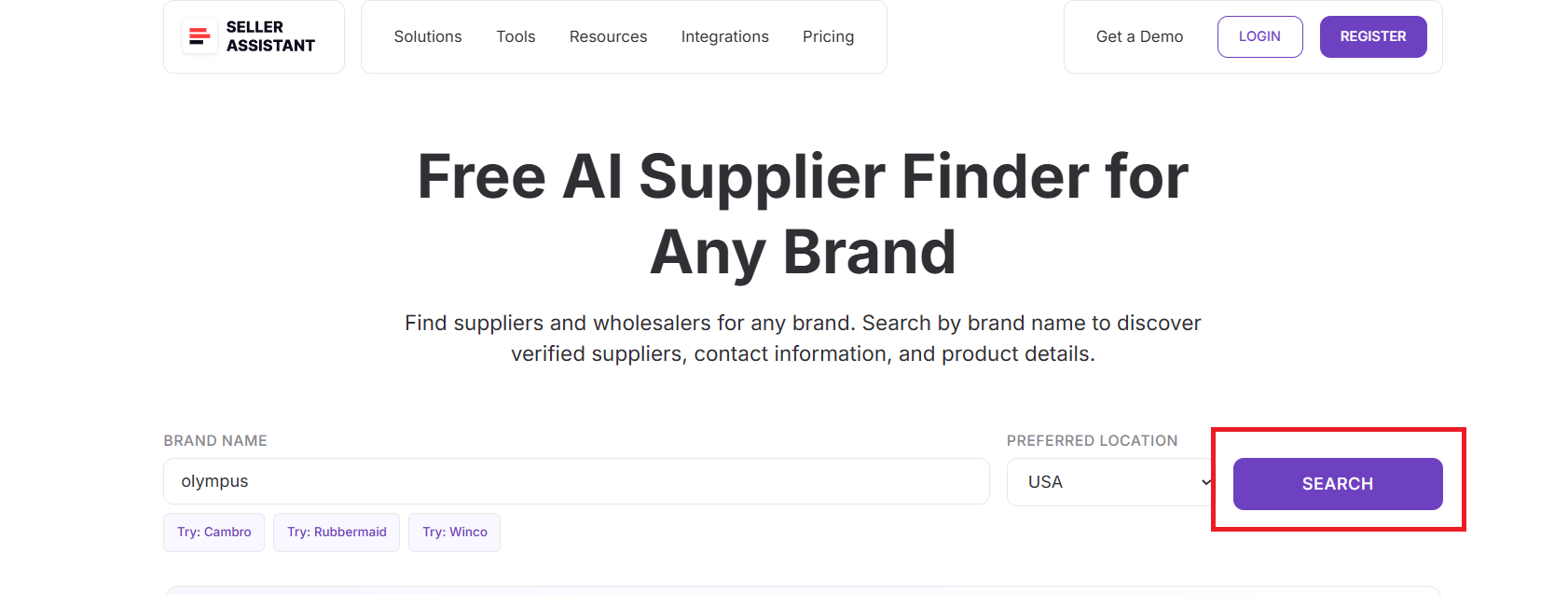
Step 3. Run the search
Click Search to generate a supplier overview for the selected brand.
Step 4. Review supplier results
The tool returns:
- A brand sourcing summary explaining how the brand is supplied
- A list of authorized suppliers, brand owners, and alternative sourcing partners
- Confidence labels for each result
- Supplier descriptions, websites, contact details, and physical addresses
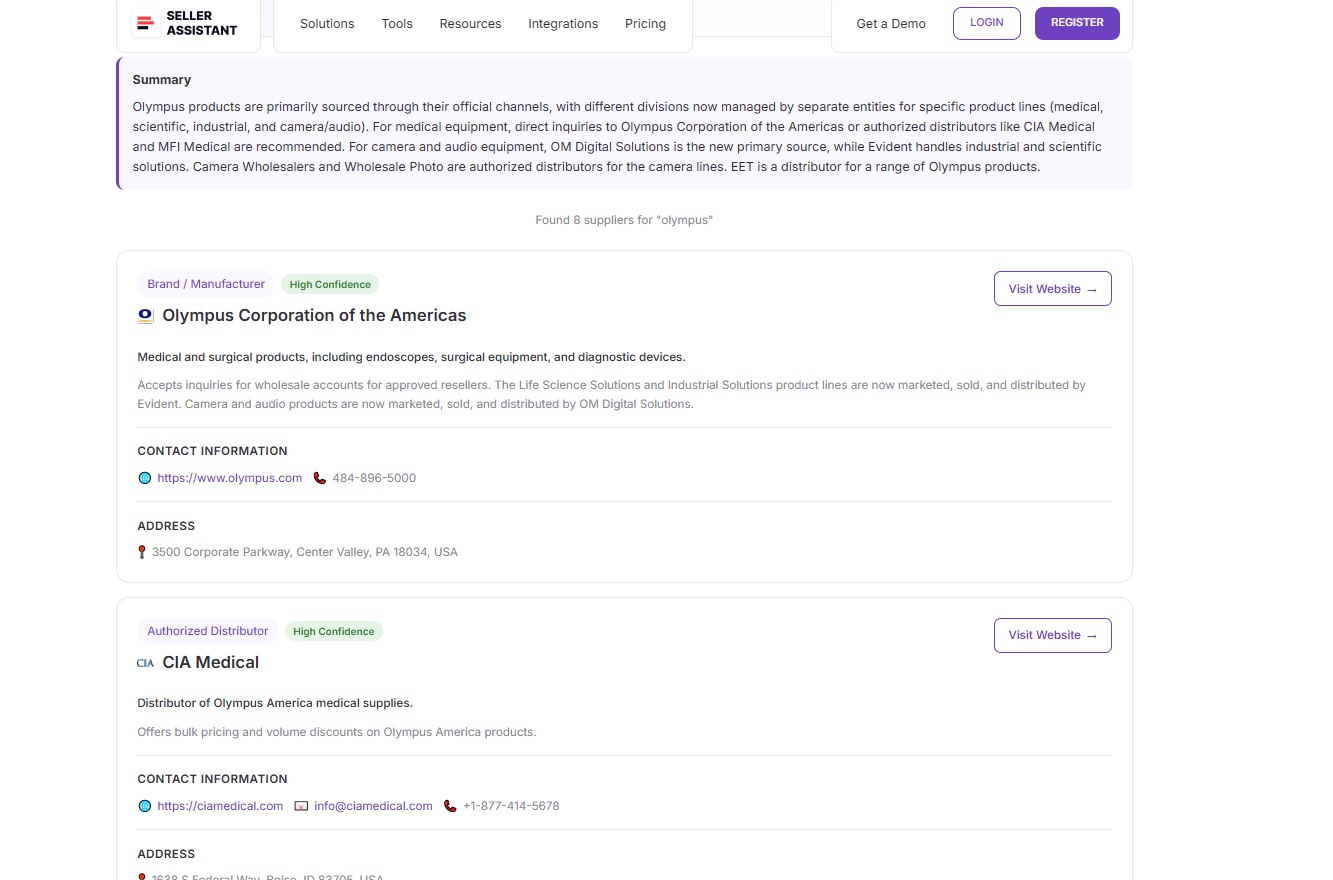
This allows you to quickly separate official suppliers from secondary or alternative sources and move forward with confidence.
Common Wholesale Sourcing Mistakes Amazon Sellers Make
Most wholesale sourcing problems on Amazon don’t come from bad luck. They come from repeatable mistakes sellers make when choosing brands, suppliers, or deals.
These issues often start small but later turn into lost profit, rejected invoices, IP complaints, or account health risks. Knowing these mistakes upfront helps you build a sourcing process that is safer, more efficient, and scalable.
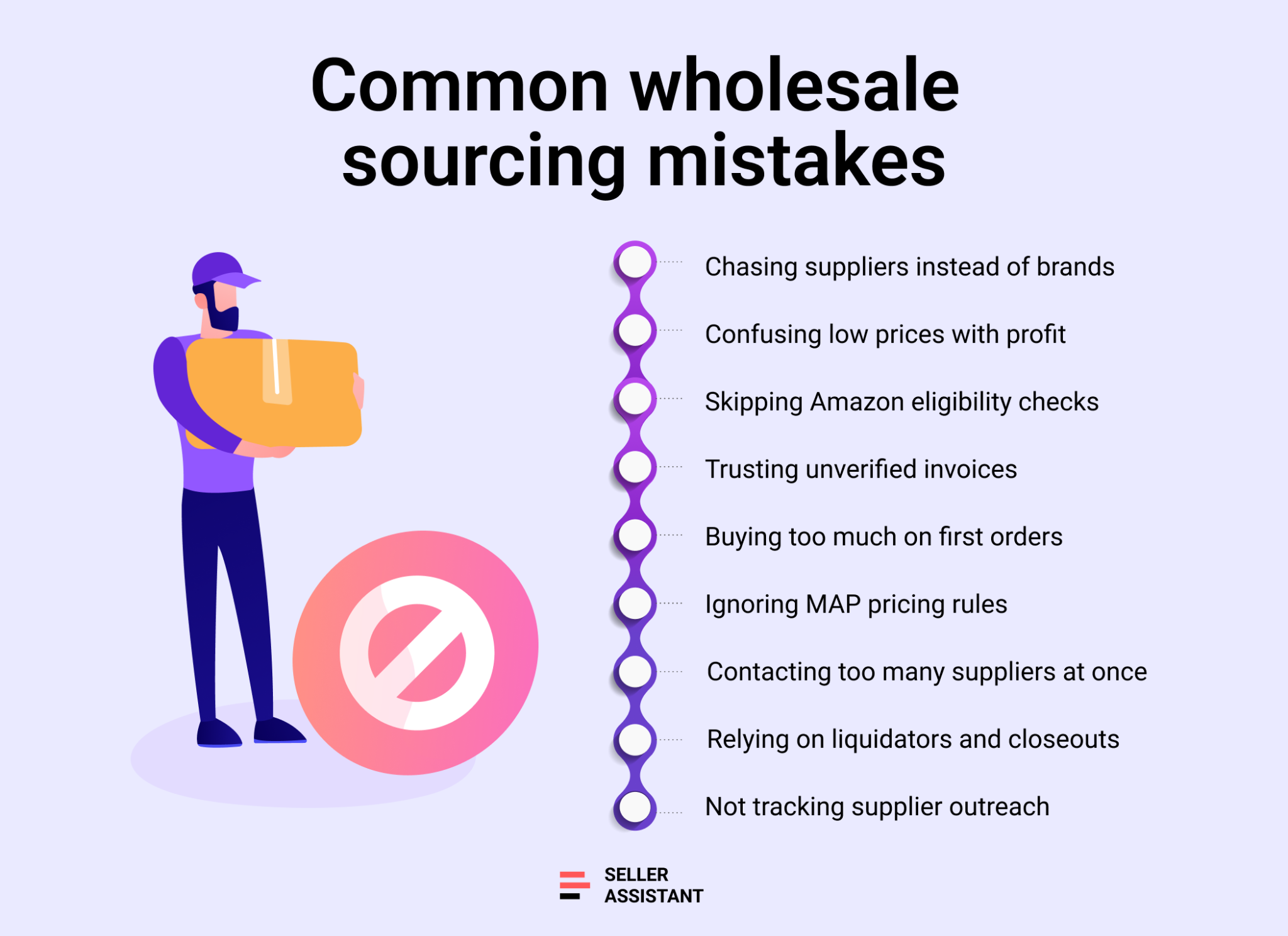
Chasing suppliers instead of brands
Many sellers begin by looking for suppliers without confirming whether the brand itself allows third-party sellers on Amazon. If a brand restricts resellers or controls its own listings, no supplier can fix that. Brand research must always come first.
Assuming low prices mean profitability
A low wholesale cost does not equal profit. Sellers often overlook FBA fees, referral fees, returns, storage, and advertising. Once real Amazon costs are applied, many “good deals” turn into losses.
Ignoring selling eligibility and gating
Reaching out to suppliers before checking brand or category restrictions wastes time and damages credibility. Some products require approval, invoices, or brand authorization. Skipping this step often leads to products you cannot list.
Trusting invoices without verifying supplier legitimacy
Not every invoice protects your account. Sellers sometimes assume that any invoice will pass Amazon checks. If the supplier is unauthorized or cannot be verified, the invoice may be rejected during authenticity or IP reviews.
Buying too deep on the first order
Placing large opening orders increases risk. Many sellers commit too much inventory before testing demand, Buy Box stability, or supplier reliability. Small test orders provide real data and protect cash flow.
Overlooking MAP and pricing policies
Some brands enforce strict MAP pricing. Ignoring these rules can result in warnings, Buy Box loss, or supplier termination. A supplier only works if its pricing policies align with Amazon competition.
Contacting too many suppliers at once
Mass outreach often backfires. Contacting dozens of suppliers at the same time leads to poor follow-up, missed replies, and weak communication. It also makes it harder to tailor your pitch or track responses. Focused, organized outreach produces better approval rates.
Relying on liquidators and closeouts for wholesale
Liquidators may offer attractive prices, but they usually provide weak invoices and inconsistent supply. These deals rarely support long-term wholesale growth and often trigger account issues when brands review sellers.
Failing to track supplier outreach and approvals
Without proper tracking, sellers lose visibility into conversations, terms, and approval status. This leads to duplicate outreach, missed opportunities, and sourcing chaos as the business grows.
FAQ
Do I need authorized suppliers to sell wholesale on Amazon?
You can sell using unauthorized suppliers, but it increases the risk of IP complaints and rejected invoices. Authorized suppliers offer stronger account protection and are safer for long-term wholesale.
What invoices does Amazon accept for wholesale sourcing?
Amazon accepts invoices that clearly show the supplier’s business details, your business name, purchase date, quantities, and matching SKUs. Invoices from unverified or unauthorized suppliers may be rejected during checks.
Can I start wholesale on Amazon with a new seller account?
Yes, but approvals may take longer and some brands or categories may be gated. Starting with smaller brands and clean invoices improves approval chances.
How many wholesale suppliers do I need to start?
You only need one reliable supplier to start. Adding suppliers gradually helps you manage risk and build a stable wholesale operation.
Is wholesale better than online arbitrage for Amazon sellers?
Wholesale offers better scalability and account stability over time. Online arbitrage can work short term but is harder to scale and more exposed to listing volatility.
Final Thoughts
Finding wholesale suppliers that actually work on Amazon is not about shortcuts or secret lists. It’s about understanding which brands allow resellers, choosing the right type of suppliers, and verifying every step before you buy. When you combine structured brand research, eligibility checks, and supplier validation, wholesale becomes predictable instead of risky. Tools like Seller Assistant’s Free AI Supplier Finder and Sourcing AI help speed up this process, but the real advantage comes from using them with discipline. Start small, stay organized, and focus on suppliers that support clean invoices, stable pricing, and repeat orders. That’s how Amazon wholesale turns into a scalable, long-term business.
Seller Assistant automates and connects every stage of your Amazon wholesale and arbitrage workflow. It brings together in one platform: workflow management tools – Purchase Orders Module, Supplier Database, Warehouse Database, bulk research & sourcing tools – Price List Analyzer, Bulk Restriction Checker, Sourcing AI, Brand Analyzer, Seller Spy, Chrome extensions – Seller Assistant Browser Extension, IP-Alert Extension, and built-in VPN by Seller Assistant, and integrations & team access features – seamless API connectivity, integrations with Zapier, Airtable, and Make, and Virtual Assistant Accounts.